
Cartalax vs BPC-157: How Do They Compare for Inflammation Relief? When comparing Cartalax vs BPC-157, researchers examine how each peptide

Peptides are essential in modern research, particularly regarding their potential in regenerative medicine, skincare, and hair restoration. Among the various peptides attracting the research community’s attention, AHK-Cu and GHK-Cu stand out as the most prominent.
While both are copper peptides, they possess distinct molecular structures and specialized applications that define their roles in therapeutic research. These two compounds offer unique benefits rather than being identical tools.
To understand what sets them apart, researchers must explore their molecular sequences and specific biological targets. Identifying the differences and similarities between AHK-Cu and GHK-Cu enables the selection of the most effective peptide for specific goals, whether the focus is hair follicle stimulation, wound healing, or overall skin regeneration.
Explore AHK-Cu Peptide from Direct Peptides Oceania, a copper peptide known for its potential to stimulate hair growth and improve scalp health.
At the heart of the discussion about AHK-Cu vs GHK-Cu lies their molecular structures. While both are copper-binding peptides, they differ critically in their amino acid composition.
Both molecules are tripeptides (chains of three amino acids), but they utilize different sequences to achieve their effects. GHK-Cu consists of Glycine-Histidine-Lysine, whereas AHK-Cu replaces the glycine with alanine, resulting in the sequence Alanine-Histidine-Lysine.
These subtle structural variations lead to distinct biological outcomes. AHK-Cu has demonstrated specific efficacy in hair restoration research. It works by binding to receptors on dermal papilla cells within hair follicles, promoting their proliferation and preventing programmed cell death (apoptosis). This targeted action stimulates hair growth and helps reduce hair loss.
On the other hand, GHK-Cu is renowned for its broader range of regenerative properties. It is widely recognized for its versatility in skin repair, wound healing, and the stimulation of collagen and elastin production. This makes it a powerhouse for general tissue remodeling and anti-aging skincare.
The comparison between AHK-Cu vs GHK-Cu ultimately depends on your specific research goals: Are you primarily focused on targeted hair follicle stimulation, or are you exploring general skin regeneration and systemic anti-aging applications?
Explore Peptide Supplies at Direct Peptides Oceania for all your reconstitution requirements.
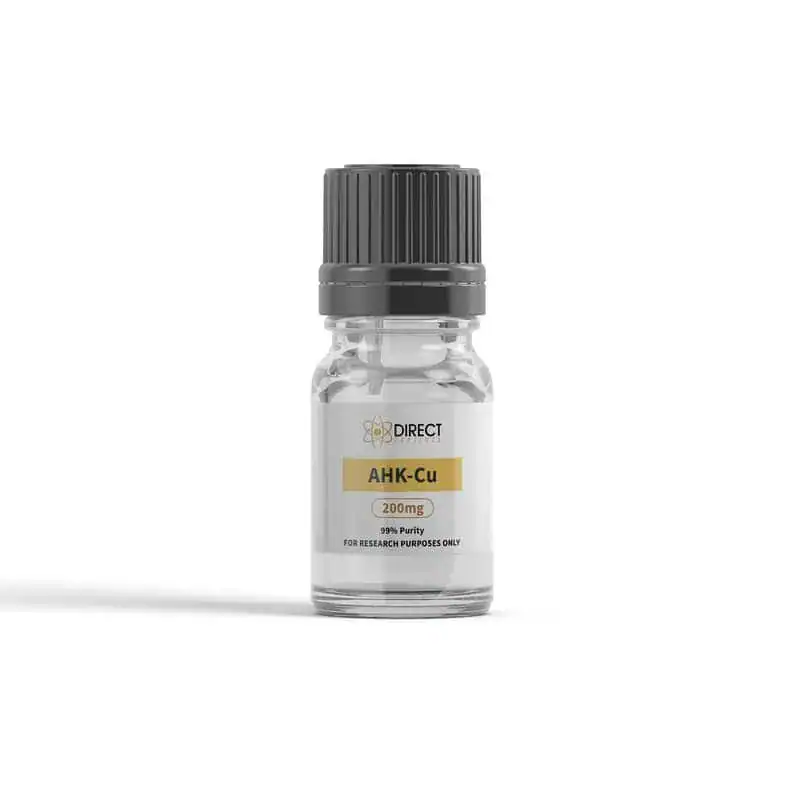 Building on the molecular differences, AHK-Cu is particularly effective in the realm of hair restoration. This peptide works by binding to specific receptors in hair follicles, activating growth factors that extend the anagen (growth) phase of hair.
By stimulating these receptors, AHK-Cu is thought to promote hair thickness and reduce shedding, making it a popular peptide for researchers exploring potential treatments for hair loss.
Moreover, AHK-Cu can enhance blood circulation in the scalp, fostering a healthier environment for hair follicles to thrive. This mechanism may help restore scalp health and overall hair vitality, making AHK-Cu the peptide of choice for targeted hair restoration studies.
While AHK-Cu effectively promotes hair growth, GHK-Cu proves to be a more versatile peptide because it offers a broader range of applications in regenerative medicine. GHK-Cu aids in wound healing, skin regeneration, and inflammation reduction.
Unlike AHK-Cu, which targets hair restoration, GHK-Cu promotes tissue repair and collagen synthesis, playing a vital role in skin regeneration. Research shows GHK-Cu stimulates the production of glycosaminoglycans, essential for tissue hydration and skin elasticity. This peptide helps heal wounds, improve skin quality, and reduce the signs of aging.
Discover GHK-Cu from Direct Peptides Oceania, a powerful copper peptide that supports skin regeneration, collagen synthesis, and wound healing.
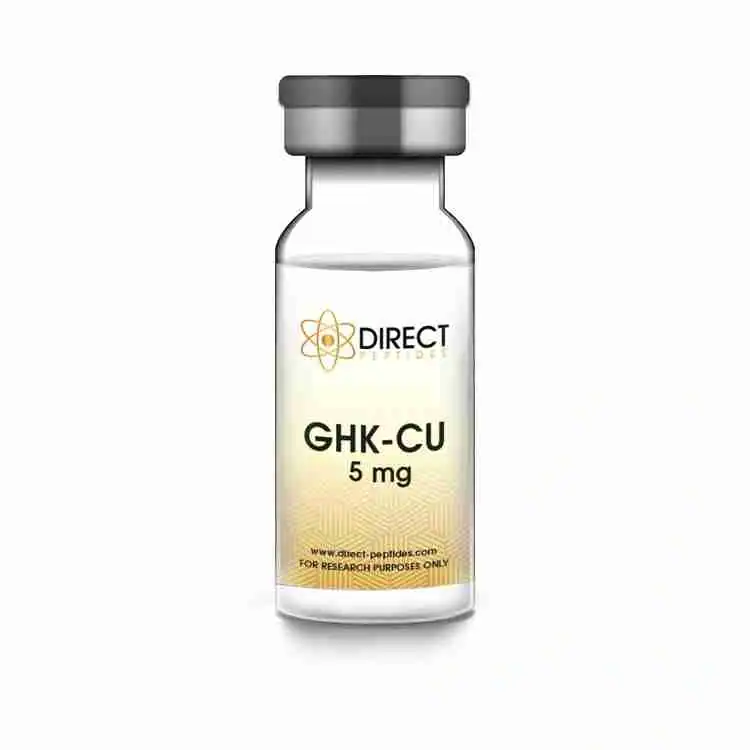
GHK-Cu plays a critical role in skin health by actively stimulating collagen synthesis. Collagen is the structural protein that gives skin its strength and elasticity, but its levels decline with age, leading to wrinkles. GHK-Cu addresses this issue by stimulating fibroblasts to produce more of this protein, thereby improving skin firmness and reducing sagging.
Researchers demonstrate that GHK-Cu promotes the production of new collagen and accelerates tissue repair, restoring skin elasticity. These regenerative properties enhance overall skin health, making GHK-Cu a popular subject in anti-aging and skincare research.
Building upon its collagen-stimulating properties, GHK-Cu is widely used in studies on wound healing. When the skin or tissues are injured, GHK-Cu plays a significant role in accelerating the healing process by promoting the formation of new blood vessels (angiogenesis) and increasing the activity of fibroblasts in the injured area. This peptide has shown promise in healing both acute and chronic wounds by facilitating faster tissue regeneration.
GHK-Cu’s ability to speed up healing and enhance tissue regeneration makes it an essential focus for researchers working in regenerative medicine, especially in areas involving skin damage, scarring, and recovery from injuries.
With the molecular differences and applications of AHK-Cu and GHK-Cu now clearly outlined, you may be wondering which peptide is better suited for your research focus.
If your primary research goal involves hair restoration and improving scalp health, AHK-Cu is the peptide of choice due to its targeted action on hair follicles.
However, if your research revolves around skin regeneration, wound healing, or anti-aging applications, GHK-Cu would be a more versatile option, as it can address a wider array of regenerative needs.
Both peptides have their unique advantages, and the choice ultimately depends on the specific areas of focus within your research.
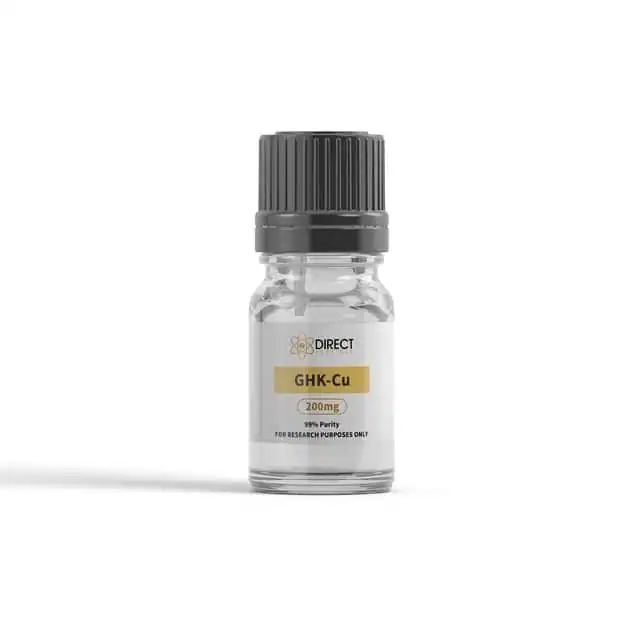
Understanding the comparative safety of AHK-Cu and GHK-Cu is critical for any experimental application. Both peptides have been extensively studied in controlled laboratory settings and demonstrate a favorable safety profile when used according to strict research guidelines.
However, outside of these controlled environments, there is a need for continued investigation and clinical trials to fully establish their safety for broader use. It is important to emphasize that these peptides are currently designated for research purposes only. They should be handled solely by qualified professionals in regulated environments, as their application outside of research settings remains limited pending further safety and efficacy confirmation.
The difference between AHK-Cu vs GHK-Cu lies primarily in their molecular structures and specific research applications. AHK-Cu is particularly suited for hair restoration and scalp health, while GHK-Cu excels in broader tissue regeneration, wound healing, and anti-aging studies.
For researchers, choosing between the two peptides should be based on the specific goals of the project. Both peptides have proven effective in their respective domains, but their potential benefits for human health remain a subject of ongoing investigation.
[1] Pyo HK, Yoo HG, Won CH, Lee SH, Kang YJ, Eun HC, Cho KH, Kim KH. The effect of tripeptide-copper complex on human hair growth in vitro. Arch Pharm Res. 2007 Jul;30(7):834-9.
[2] Sadgrove NJ, Simmonds MSJ. Topical and nutricosmetic products for healthy hair and dermal antiaging using “dual-acting” (2 for 1) plant-based peptides, hormones, and cannabinoids. FASEB Bioadv. 2021 Jun 6;3(8):601-610.
[3] Pickart L, Margolina A. Regenerative and Protective Actions of the GHK-Cu Peptide in the Light of the New Gene Data. Int J Mol Sci. 2018 Jul 7;19(7):1987.
[4] Pickart L, Vasquez-Soltero JM, Margolina A. GHK Peptide as a Natural Modulator of Multiple Cellular Pathways in Skin Regeneration. Biomed Res Int. 2015;2015:648108.
Shop ALL Topical Peptides from Direct Peptides Oceania today, your trusted supplier of premium clinical grade peptides online.
AHK-Cu is often described as more targeted for hair-related research because it interacts closely with hair follicle signaling pathways. GHK-Cu supports broader regenerative activity rather than focused hair follicle stimulation. Instead of being stronger, AHK-Cu is more specific in scope, while GHK-Cu supports wider biological repair processes.
AHK-Cu and GHK-Cu do not work the same way. Both bind copper, but they influence different biological pathways. AHK-Cu mainly affects hair follicle activity and growth signaling. GHK-Cu supports collagen production, tissue repair and the regulation of inflammation. Their shared copper binding leads to different functional outcomes.
GHK-Cu may support hair health indirectly by improving tissue repair and the follicle environment. However, it does not show the same targeted hair follicle activity as AHK Cu. AHK-Cu remains more specific to hair growth research, while GHK-Cu is studied more for skin regeneration, and general tissue repair.
Copper peptides mainly support tissue repair and follicle health rather than hair color. While copper plays a role in pigment related processes, research does not clearly show that copper peptides maintain hair color or prevent greying. Their primary focus remains regeneration, structural support, and overall follicle function rather than pigmentation control.
GHK-Cu is considered more versatile because it supports multiple regenerative processes. These include collagen synthesis, wound repair, angiogenesis and the control of inflammation across different tissues. AHK-Cu shows a narrower focus on hair follicle activity. This wider range of biological actions gives GHK Cu broader research applications.
Cartalax vs BPC-157: How Do They Compare for Inflammation Relief? When comparing Cartalax vs BPC-157, researchers examine how each peptide
Benefits of HCG For Men Oceania Exploring the Benefits of HCG for Men Oceania Human Chorionic Gonadotropin (HCG) is becoming

Is Cartalax Bioregulator Oceania the Future of Arthritis Management? Yes, Cartalax Bioregulator shows potential in arthritis research by targeting pathways

What Are the Best Peptides for Hair Growth Oceania? Hair loss is a widespread issue, leading many to explore potential